Why rhythm connects faster than talk
Group integration does not start with talking about feelings. It starts with shared action. A child who cannot yet name emotions can still show that they hear others by keeping the same rhythm with them. For the child it is a safe way of belonging to the group.
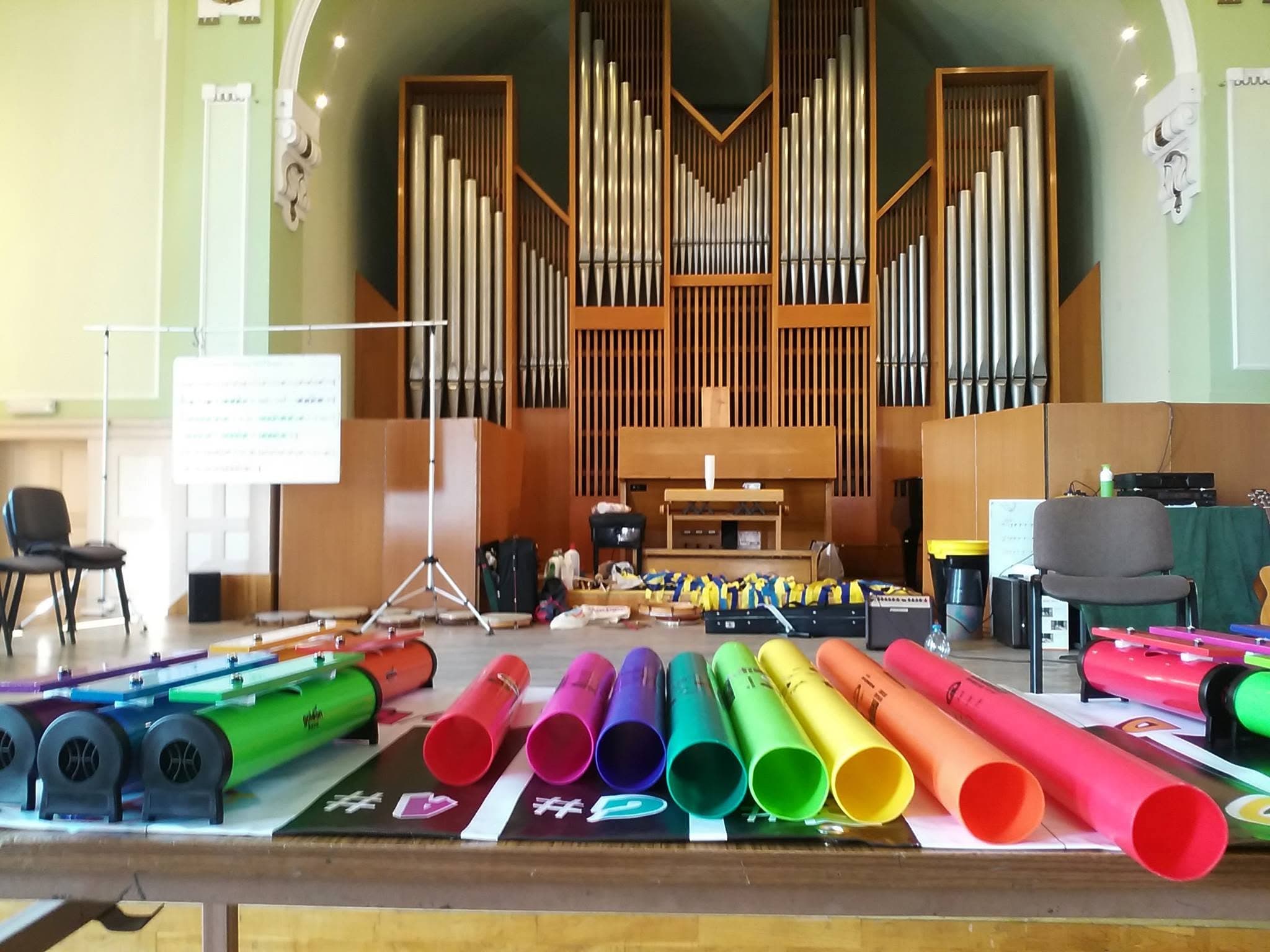
Tubes fit this perfectly, because every participant holds an instrument and a place in the sound. Nobody is a spectator, and at the same time nobody has to be a soloist in the first minute. Integration happens in the sound before anyone says the word trust.
Four rules of integration through action
Regardless of age, I stick to four rules that separate real integration from ordinary play.
- Equal role, every participant has a visible share in the result, even one hit in the circle.
- One clear rule per game instead of a long instruction.
- A safe exit, the STOP signal and the knowledge that pausing is allowed.
- Naming the result, after the game you say what the group made together, without rating individuals.
Preparation that saves the session
Good integration starts before the children enter the room. Prepare the tubes in baskets so they can be handed out within a minute, and so that nobody chooses a colour, because choosing an instrument is the first moment a child can feel left out.
- Lay tubes on chairs before the session, each child gets the instrument where they sit.
- Keep neighbouring colours different, so every child has somebody with another voice nearby.
- Prepare one spare game in case the group works faster than expected.
- Decide in advance what you do with a child who does not want to play, so you are not improvising under stress.
The first 20 minutes with a new group
This sequence has served me for years with new groups, from preschool up.
- Minutes 0-3, the name circle, each child plays one sound in turn as names travel from hand to hand.
- Minutes 3-8, rhythmic echo, the leader plays a pattern and the group answers, starting from two beats.
- Minutes 8-14, two colours, simple alternating playing, the first shared pattern of the whole group.
- Minutes 14-18, swap roles or let the group propose its own ending to the pattern.
- Minutes 18-20, one question, what did you hear when we played together, and naming the result.
Variants by age
In preschool stay with the circle and repeatable rituals, children at this age build trust through repetition rather than novelty. In grades 1-3 add colour groups and shared patterns, children start watching not only themselves but their neighbours too.
With older children replace ready instructions with a creative task, for example composing the group's own eight-beat pattern and teaching it to the rest. Creating together connects more than simply playing together, and it quietly reveals the natural roles in the class.
What about children who do not want to play
Some children prefer to watch at first. Do not push them into a performance, because resistance grows. Give them an observer role with a task, such as guarding the STOP signal or keeping the tempo.
Return to them after the first game and ask what they heard. Very often they ask for a tube on their own within minutes. If not, let them observe through the next session too, shared playing allows joining at any moment.
Three mistakes that break integration
Integration is a delicate process, and these mistakes can undo a well-planned session.
- Competition instead of community, any comparing of children to each other turns play into a contest and excludes.
- Forcing a performance in front of the group in the first session, before the group has met itself through shared play.
- Inconsistency between sessions, a different frame and different signals each time teach the group uncertainty instead of trust.
Integration as a process, not a one-off event
The first session opens a process rather than closing one. A group builds trust by repeating rituals across meetings, so the same opening and closing scheme works here as an anchor of safety.
Over time, hand the group more and more, first the conductor role, then the task of composing their own pattern, finally planning a shared performance. The moment children organise a shared game themselves is the best proof that integration works. If you would like an experienced trainer to lead such a cycle, see the music workshops for children and call.
What comes next
Integration does not end after one session, but the first shared rhythm stays with the group for a long time. The natural next steps are songs and a small performance, which I describe in the boomwhackers songs guide.
If you would rather have an experienced trainer lead such a session, see the music workshops for children and call to arrange a date that fits the age of the group and your venue.